Do you have questions about getting involved with mentored research as an undergraduate? Ask experts who are undergraduates themselves!
These peer mentors are currently working on their own research projects, and are available to talk to you about the research process. They have the experience and training to answer questions such as:
- “How do I get started with my research?”
- “Will I get paid to work on research, or am I eligible for a special scholarship?”
- “How do I find a faculty mentor who will oversee and guide my work and training?”
How to Meet with a Peer Mentor
We use Microsoft Bookings to schedule in-person or virtual meetings between students and our peer mentors. After first selecting whether you want to have a 30-minute in-person or a virtual meeting (hosted on Microsoft Teams), you can then select a time based on our peer mentors’ availability. You can also optionally select the peer mentor you want to meet with. We ask you for your name, WSU email, and a few details about your academic and research interests. Once you book an appointment, a reminder about the meeting will be sent to the email you provided.
Please note: Mentors are not available during summer break, WSU breaks, WSU holidays, the week before final examinations, or the week of final exams. Be sure to double check the WSU academic calendar to confirm these dates. (You will see that peer mentors’ availability on Microsoft Bookings should account for these breaks.)
Fall 2026: The first day for Fall 2026 appointments is Tuesday, September 1. The last day for Fall 2026 appointments is Friday, December 4.
Spring 2027: The first day for Spring 2027 appointments is Monday, January 11. The last day for Spring 2027 appointments is Friday, April 23.
About Our Peer Mentors
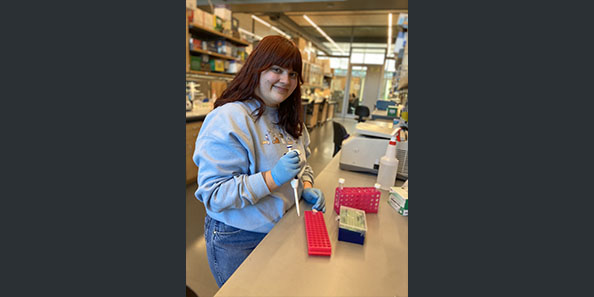
Jocelynn Brown
Hometown: Surprise, Arizona
Major: Animal Science
Minor: Biology
Interesting fact: I have a cat named Paisley with me in Pullman.
Research activities: I have been doing research since my Freshman year at WSU in Dr. Kimberly Davenport’s lab. I’ve been part of numerous projects including a comparative analysis of immune cells in the placenta of humans and cattle, examining the POMC deletion in labradors and golden retrievers, a comparative analysis of the endometrium tissues of humans, pigs, horses, and cattle, and examining the TYRP1 gene in moorit and “muddy moorit” wensleydale sheep. I have been able to present at multiple conferences including SURCA, the International Plant and Animal Genome Conference, and the American Society of Animal Science based on this work. I am also a co-author on a published manuscript and a manuscript under review for publication. All this work is helping reach my goal of getting my master’s in animal science and a Ph.D. in Immunology. Research is something I am very passionate about, and I’m excited to help others get started in research to see if they enjoy it too!
Thomas Cline
Major: Chemistry and Physics
Minor: Mathematics
Interesting fact: I have a German Shepard named Chance living with me in Pullman this year.
Research activities: I am currently doing research in the Kevin Kittilstved lab; I started in the spring 2025 semester. I am currently working on quantifying kinetics and energetics of the reduction of Cr atoms in Cr:Sr2TiO4 using electron paramagnetic resonance spectroscopy. I’ve been working on this project since around February 2025.
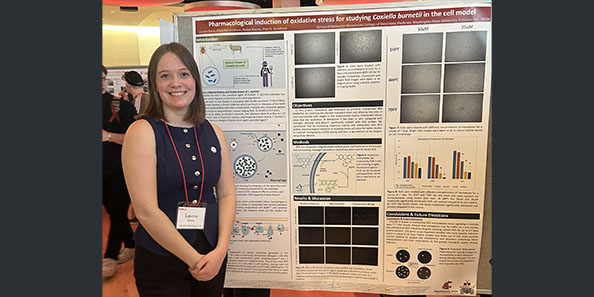
Lauren Davis
Hometown: West Richland, Washington
Major: Biochemistry on the Molecular Biology track (Pre-Med)
Minor: Chemistry
Interesting fact: I’ve performed in the Indianapolis Colts’ stadium while participating in drum corps.
Research activities: I have been a member of Dr. Alan Goodman’s lab since the beginning of my sophomore year in August 2025, where I am involved in two immunology-focused research projects. In my first project, I study how different control and mutant strains of West Nile Virus and Coxiella burnetii affect Drosophila melanogaster flies. I inject male and female flies with the different strains and track their mortality over a 30-day period. I then compare the survival of male versus female flies and examine differences between the control and mutant strains to better understand how these pathogens affect their hosts at different stages of infection.
For my second project, I work with a mentor to investigate the oxidative stress pathways associated with Coxiella burnetii when it is taken up by macrophages. Currently, we are using the drug menadione to induce oxidative stress in L929 (mouse fibroblast) cells as a way to model the pathways activated by Coxiella burnetii. We use fluorescent dyes, including Hoechst to stain cell nuclei and CellROX to detect oxidative stress, allowing us to measure and compare oxidative stress in treated and untreated cells. Our goal is to establish a reliable model of oxidative stress that we can use to better understand how Coxiella burnetii affects cells. The long-term goal of our research is to contribute to a better understanding of Q fever, an illness caused by Coxiella burnetii, and potentially help identify improved treatment options beyond the prolonged use of multiple antibiotics.
Both projects have given me valuable experience with laboratory research, data analysis, and experimental design while allowing me to explore my interest in immunology and infectious disease. As someone pursuing a career in medicine, I believe that understanding the science behind disease and gaining insight into the research process are both important parts of becoming the kind of physician I hope to be, so I thoroughly enjoy what I do! In addition to being an Undergraduate Research Peer Mentor, I am also the President of the Molecular Biosciences Club which has the same goal, so please don’t hesitate to reach out with questions about how to get into research as an undergraduate!
Sasha Green
Major: Public Health, infectious disease track
Minor: Sociology
Interesting fact: I am a big fan of movies; I love watching them and I go to the movie theater almost once a week.
Research activities: Last year I started an independent research project with my faculty mentor, Dr. Kimberly McBride. My research is in the fields of health sciences, public health, and the social sciences and surrounds college men’s thoughts, perspectives, and attitudes surrounding male birth control. I have experience with getting a faculty mentor, starting an independent research project, receiving funding and scholarship, and presenting those projects at SURCA and other conferences across the US. If you are interested in research in the humanities or social sciences or want to start your own research project, I am more than happy to help!
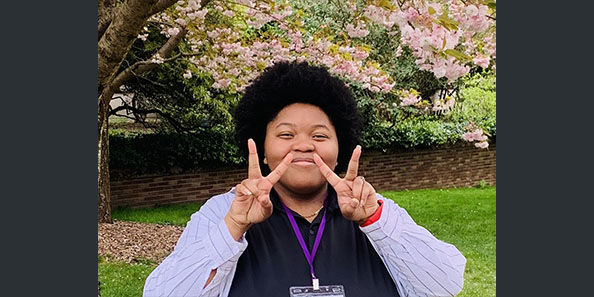
LaTrra Harris
Major: Civil Engineering
Interesting fact: I am an avid enjoyer of anime and reading manga! Some of my favorite animes are Haikyu, Bleach and Pluto. Outside of anime, I listen to an obscene amount of music, such as RM (from BTS), Ariana Grande, and SZA.
Research activities: I began attending WSU in 2020, and my major was not initially Civil Engineering. My academic journey has brought me from Neuroscience to Business, then all the way to Interior Design, before I finally arrived at Civil Engineering. It was through Civil Engineering that I discovered my passion for research and how the complex topics within Civil Engineering are taught. Following my Geotechnical Engineering class and with the support of the McNair Scholars Program, I began research under Dr. Zhijie Wang on post-wildfire slope stability and how this can be addressed through the coding of artificial neural networks (ANNs). However, my research continued to expand beyond what I initially expected, as I began to delve into the decision-making side of geotechnical assessments, and hazard mitigation strategies. With our world constantly evolving, artificial intelligence could be a useful tool for supporting geotechnical engineers in protecting the health, safety and welfare of the public, as all engineers are supposed to do.
Nevertheless, when I am not either working, attending classes, or conducting research, I am spending time with my fiancé, playing games, reading, or listening to music. It can be entirely too easy to lose ourselves in the pursuit to obtain our degrees, and by taking time to destress, I have been able to make it this far in my academic career. I have read so many books, including philosophy, manga, fiction, and history books. Currently I am reading Hunter x Hunter for the second time and listening to Ariana Grande’s latest album, Petal. I have spent too much on BTS albums and RM (leader of BTS) merch, but all of these things make me so incredibly happy, and I hope to teach students about this when it comes to trying to balance research and other obligations.
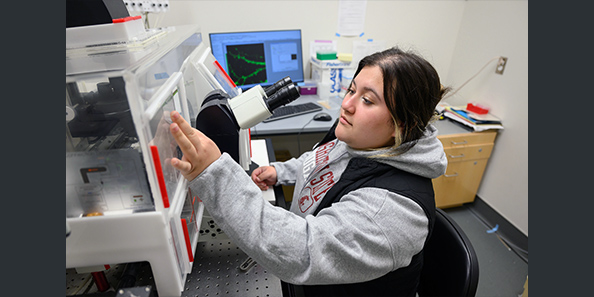
Tiana LaFollette
Hometown: Zillah, Washington
Major: Neuroscience and Psychology
Minor: Chemistry, Biology, and Genetics and Cell Biology
Interesting fact: When I am not in lab, I love to spend time with my cat Cooper! (He is a rare cat!), or I love to play games with friends.
Research activities: I have been working in the Dr. Gary Wayman lab for around 3 years now! I have been working on a variety of projects!
The first project is working on insulins affect in the developing hippocampus. Here I have studies P8 day old mice neurons seeing how intranasal insulin administration affects their synaptic development in the CA1 Region of the hippocampus. With this project, I have also studied how BDNF (Brain-Derived Neurotrophic Factors) and its receptor TrkB (Tropomyosin Receptor Kinase-B) had affects in the neurons, and how insulin affected the already affected neurons.
For the second project, I have been working on Kappa Opioids. I have been working on cloning different types of Kappa Opioids like Oprl1 (Opiod receptor like 1) and others! I mainly have been working on the cloning process of these kappa opioids, but I have started to put them into neurons to see the effects of these Kappa Opioids.
For the final project, I have been working on a paternal test. This test is to run male mice on a treadmill, later pairing them with a female mouse. Then, study their offspring to see how the hippocampus was affected due to the “father” exercising.
All this work has led to national awards at conferences at ABRCMS; SURCA awards, and even Oral Presentations for the honors college. I love research and everything it has done for me in my life! I am so excited to help others get involved in research and find their passion : )!
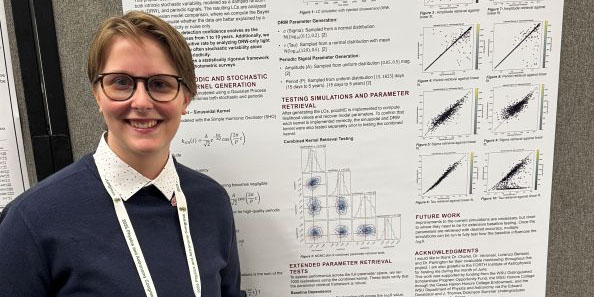
Allison Mata
Hometown: Boise, Idaho
Major: Physics, with a specialization in astrophysics
Minor: Mathematics
Interesting fact: I love to cook and go hiking.
Research activities: I have been involved in research with Dr. Maria Charisi and her international research group since October 2024. I have worked on improving methods of locating supermassive black hole binaries (SMBHBs) that form as a result of galaxy mergers in our universe. Supermassive black holes (SMBHs) are millions to billions of times the mass of our own Sun and observational evidence has shown that a large fraction of galaxies in the universe host a SMBH at its center. If the galaxies merge, the central SMBHs begin to orbit one another and form a binary. My research focuses on modeling the light produced from SMBHBs by ground-based telescope surveys such as the recent Legacy Survey of Space and Time (LSST). The hope is to establish a robust baseline expectation of when the black holes will be detectable in the survey through simulating the observations and applying current statistical analysis models.
This research has taught me a lot about scientific collaboration, applying research methods, and building skills. I have also built a robust network of international collaborators working with Dr. Charisi and her international research group while studying in Crete, Greece at the FORTH Institute of Astrophysics. I have been able to present my research at WSU during SURCA and multiple regional, and national conferences. All of this has worked towards my goal of obtaining a Ph.D. in Astronomy and Astrophysics and being a professor at research institution.
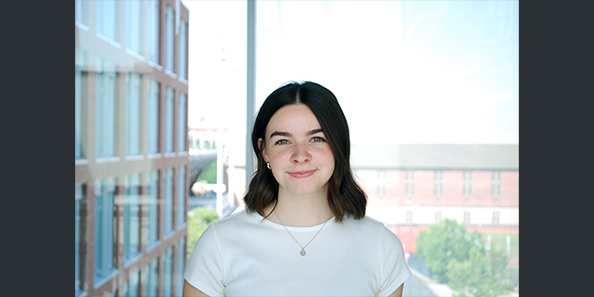
Taylor Page
Hometown: Kennewick, Washington
Major: Biochemistry
Minor: Chemistry
Interesting fact: In my free time, I love to sew! My most recent project was making a big quilt.
Research activities: I have been involved in research since the beginning of my time at WSU, and have now been in Dr. Kanako Hayashi’s lab for over 2 years. During this time, I have focused on women’s health and reproductive biology. I first worked on a project investigating non-steroidal therapies for endometriosis, which gave me my first experience with molecular techniques and helped me understand how research can address unmet needs in medicine. Currently, my project aims to investigate the role of uterine FBXW7 during pregnancy using a mouse model. FBXW7 has been characterized for its role during cancer as a tumor suppressing gene, but its function in the uterus during gestation remains largely unexplored. Understanding its role may uncover key mechanisms in implantation and successful pregnancy, potentially shedding light on causes of infertility. This project has given me the opportunity to gain experience across many techniques, from mouse handling and treatments to data analysis. My work includes histology, PCR and qPCR, surgical techniques, and microscope imaging, allowing me to build a broad and versatile research skill set.
Research has been an exciting place for me to grow both personally and professionally. I have presented my work at SURCA here at WSU, as well as at regional conferences, where I’ve learned how to better communicate my project to both specialists and broader audiences. Being part of a lab has not only given me hands-on skills but also a strong sense of purpose. I am excited to help other undergraduates find their place in a lab on campus!
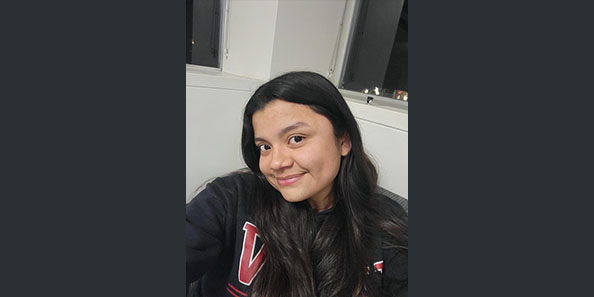
Amelia Ramirez Vargas
Hometown: Zillah, Washington
Major: Neuroscience pre-med
Interesting fact: I am a black belt in taekwondo
Research activities: I am currently working in Dr. Bert Tanner’s Lab within the Department of Integrative Physiology and Neuroscience. I have been working in the Tanner’s Lab since Fall 2024. During my time in the lab, I have had the opportunity to perform biophysical measurements on human and rodent cardiac muscles to explain the physiological changes that lead to heart failure. Currently, I am involved in a study to determine the efficacy and the overall benefits of two therapeutic agents or myotropes in the treatment of heart diseases. These myotropes are danicamtiv, a myosin activator and mavacamten, a myosin inhibitor which affect muscle function by either increasing or decreasing contractility.
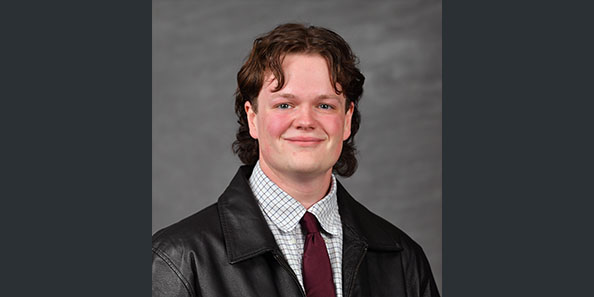
Bruce Redden
Hometown: Spokane, Washington
Major: Microbiology pre-med
Minor: Biochemistry and Chemistry
Interesting fact: I once went backpacking with nothing but a hammock, fishing gear, and cooking supplies for two weeks.
Research activities: As an aspiring MD/PhD student, I began conducting research in the summer before my very first semester at WSU in the laboratory of Dr. Arden Baylink at the College of Veterinary Medicine, and I have been working there for over two years now. My work focuses on developing novel antibiotics that target AhpC, a protein involved in oxidative stress defense in Helicobacter pylori. This bacterium is responsible for most peptic ulcers and is the main driver of gastric cancer. Throughout this project, I have worked with X-ray crystallography, biochemical and oxidative stress pathway assays, growth curve studies, swine tissue explants, and preclinical mouse trials. I have had the opportunity to present this research across the nation. I have done poster presentations here at WSU’s own SURCA, multiple times at the Northwestern Society for Microbiology Meeting, and the Annual Biomedical Research Conference for Minoritized Students (ABRCMS). I have also done oral presentations at the Western Regional Honors Conference (WRHC) and at the Harvard MD/PhD Research Symposium. All these presentations, both oral and posters, have allowed me to competitively win awards at all these conferences.
This summer, I had the opportunity to conduct an independent study at Harvard Medical School as part of the Harvard/MIT HEART MD-PhD program. In this study, I applied a cutting-edge spatial single-cell transcriptomic technique called bacterial-MERFISH to study antibiotic resistance and pathogen-host interfaces.
I know getting started in research can feel extremely overwhelming; I have definitely been there myself. However, if you have any questions about the research process, whether that is from getting into a lab, making a presentation, applying to programs, going to conferences, or about pre-med as well, I would love to help. I love helping people get into research and exploring their options, so feel free to reach out anytime!
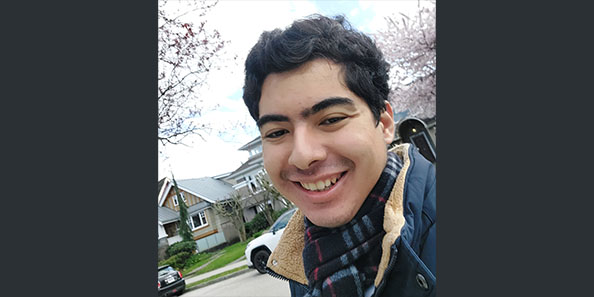
Luiz Takahashi
Major: Computer Science
Minor: Mathematics
Interesting fact: This summer I solo traveled and volunteered in Tallinn, Estonia, and in a small community in Stjarnsund, Sweden. One of my life goals is to set foot in Antarctica one day.
Research activities: I am the only computer science mentor on this page, and that is exactly why you should book a meeting with me: research in CS does not look like any of the labs above, and most students never get to see what it actually looks like.
Here is what mine looks like. I work on a joint project between Dr. Diane Cook’s lab in EECS and Dr. Maureen Schmitter-Edgecombe’s Neuropsychology and Aging Laboratory, where we teach an AI speech model to listen to recordings of memory tests taken by older adults and score them automatically. A lot of my job is detective work: finding the ways the program gets things wrong (it once heard the word “gym” as the name “Jim” ninety-seven times) and fixing them one by one, until its scores nearly match what trained researchers produce by hand. I also run projects I started on my own, from my laptop: a theory project asking when the numbers we use to evaluate AI models can actually be trusted, and a computational biology project where I analyzed datasets with millions of cells to study how lab-grown brain tissue differs from the real thing. That work grew into a first-author collaboration with a lab at Columbia University and a poster at an international conference on technology and aging.
If you can write a for-loop, you already have the starter kit. Look back at this page: the neural networks in civil engineering, the telescope survey simulations in astrophysics, the statistics behind every biology figure. Computer scientists build the tools, run the analyses, and prove the guarantees that other researchers rely on, which means CS can take you into medicine, biology, space, language, or pure math without ever touching a lab bench. Everything I use fits in a backpack.
Come talk to me if you are a CS, math, data, or engineering student who wants to start; if you are in any other major and want to bring coding into your research; or if you are an international student figuring out how research works in the US, because I have been there myself. My own start was a summer research project at the University of Sao Paulo in Brazil, and everything since grew from that first yes. I can help with the questions I once had: how to write that first email to a professor, how to find paid research positions, what to learn first, and how to begin before you feel ready. Nobody feels ready. Start anyway.
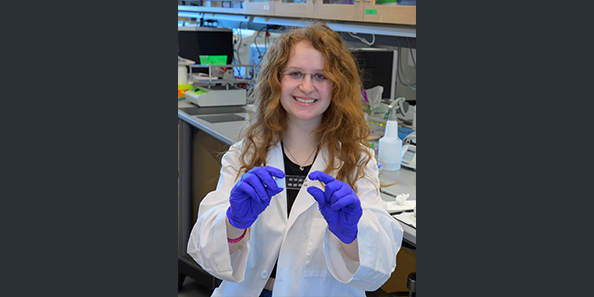
Katy Touretsky
Hometown: Yoqneam, Israel and San Jose, California
Major: Neuroscience Pre-Med
Minor: Spanish and Biology
Interesting fact: I love to read, and I used to be a Taekwon-Do Instructor.
Research activities: Since beginning my undergraduate studies at Washington State University, I have remained continuously involved in neuroscience research, joining the Delevich Lab during my first month on campus. I am a 2026 Barry Goldwater Scholar and have received multiple competitive awards recognizing my research, academic achievement, and leadership, including university research grants, endowed scholarships, and the WSU Distinguished Leader Award.
My primary research project investigates how adolescent cannabis vapor exposure affects microglia, brain circuitry, and anxiety-related behavior. I independently developed the project, wrote the grant proposal, and received funding through WSU’s Alcohol and Drug Abuse Research Program to support the work. Additional awards, including the Dr. Sue Ritter Memorial Research Scholarship, Scott and Linda Carson Undergraduate Research Excellence Award, and 2026 Emerita Undergraduate Research Grant, have further supported and recognized my research. In addition to leading my primary project, I contribute to several studies examining adolescent brain development, cannabis exposure, and menopause-related hormonal and behavioral changes in mouse models. Across these projects, I have developed experience in mouse surgery, behavioral testing, tissue processing, microscopy, analysis, and scientific writing and communication, while also mentoring and training other undergraduate researchers.
I currently have two manuscripts under review, with several additional manuscripts and projects in progress. I have shared my research through both oral and poster presentations at local, regional, and national conferences and have received national presentation awards.
Outside the laboratory, I serve as an Undergraduate Research Peer Mentor, Honors 198 Facilitator, Neuroscience 302 Teaching Assistant, College of Veterinary Medicine Promoter, and Team Peer Mentor. I also work as a certified nursing assistant at Pullman Regional Hospital. Through these roles, I enjoy helping students find research opportunities, build confidence, and navigate the process of becoming involved in undergraduate research. My long-term goal is to earn an M.D./Ph.D. and pursue a career in neurology, with a particular focus on neuroendocrinology. I hope to combine patient care, research, teaching, and mentorship as a physician-scientist.
I am excited to help other students explore undergraduate research, and I would love to meet and chat if you have questions about getting started, finding opportunities, or navigating your own research journey.
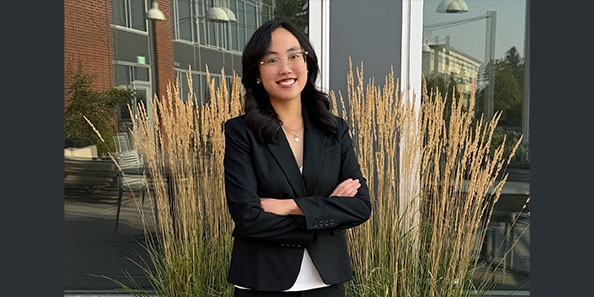
Kate Yoon
Hometown: Weiser, Idaho
Major: Biochemistry (Pre-med)
Minor: Psychology
Interesting fact: I have been playing the clarinet for 9 years and the saxophone for 4 years.
Research activities: Since January 2024, I have been involved in undergraduate research. Currently I am part of Koehler Laboratory, where I work as a research assistant for Dr. Koehler. Through this experience, I have developed a strong interest in helping other students explore and pursue research opportunities.
I was selected for the Research Scholars Program during my freshman year and have presented my research at the Showcase for Undergraduate Research and Creative Activities (SURCA) each year from 2024–2026. In summer 2026, I was selected for the Summer Undergraduate Research Fellowship (SURF), where I conducted research in Dr. Ahmed’s laboratory in Spokane. I was also honored to receive second place for Best Poster in the SURF category.
In addition to my research experiences, I am involved in leadership and professional development programs, including the EschLEAD program. I am also the co-founder and co-president of the STEM Leaders and Innovators Association, an organization open to students of all majors. Additionally, I currently serve as co-president of the Undergraduate Research Club after previously serving as secretary.
As a peer mentor, I hope to help students identify opportunities that align with their interests and goals. I am particularly interested in supporting students who are looking for research experiences, summer internships, fellowships, or ways to become more involved on campus.